
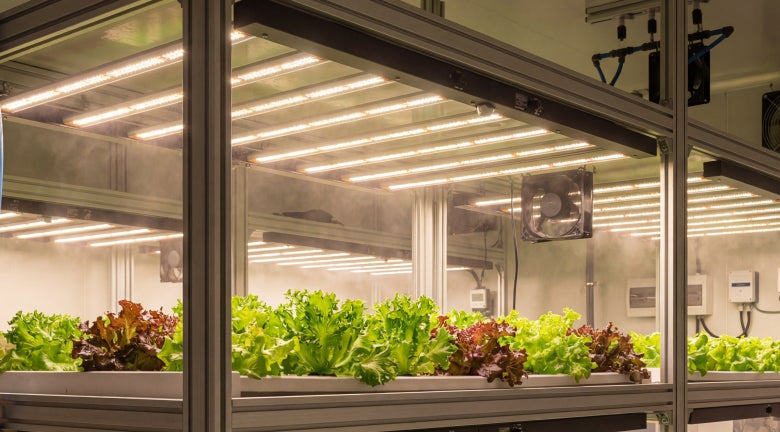
Growing Herbs and Lettuce with LED Grow Lights: Complete Guide and Tips
Growing herbs and lettuce under LED grow lights offers a great way to produce fresh, healthy vegetables year-round. With the right lighting and care, these plants can flourish, even indoors. In this blog post, you'll learn how to effectively grow herbs and lettuce using LED grow lights.
Why LED Grow Lighting?
- Energy Efficiency : LED grow lights consume less energy compared to traditional grow lights such as HPS or fluorescent lights.
- Long Life : LED lights last longer, meaning you'll need to replace your lights less often.
- Low Heat Production : LEDs produce less heat, reducing the risk of plant burns and decreasing the need for additional cooling.
- Specific Light Wavelengths : LED grow lights can be tuned to specific light spectrums that are ideal for the different growth stages of plants.
Step-by-Step Guide to Growing Herbs and Lettuce
Step 1: Choose the Right LED Grow Lights
When choosing LED grow lights for your herbs and lettuce, it's important to consider light intensity and spectrum. Look for full-spectrum LED grow lights that provide both blue and red light, which is essential for both vegetative growth and flowering.
Step 2: Preparing the Grow Room
Make sure you have a suitable growing space with adequate ventilation. A closet, basement, or dedicated grow tent can be ideal. Reflective walls or grow curtains can help distribute the light evenly.
Step 3: Pots and Substrate
Use well-draining pots and fill them with a high-quality substrate such as potting soil or coconut fiber. Herbs and lettuce need airy soil that retains water well without becoming waterlogged.
Step 4: Sowing and Transplanting
- Sowing : Sow the seeds in a seed tray or directly in pots. Cover them lightly with soil and keep them moist.
- Transplanting : When the seedlings are a few centimetres tall and have developed their first true leaves, you can transplant them to larger pots or directly to their final growing location.
Step 5: Light Cycle and Lighting
- Light duration : Keep the lights on for 12-16 hours per day for optimal growth. Herbs and lettuce need a lot of light to thrive.
- Distance to Plants : Place the LED grow lights approximately 30-45 cm above the plants. Adjust the height as the plants grow to prevent them from receiving too much light.
Step 6: Water and Food
Keep the soil consistently moist, but not soggy. Consider a nitrogen-rich nutrient solution for vegetative growth. Add a liquid fertilizer biweekly to ensure your plants get all the nutrients they need.
Step 7: Maintenance and Harvest
- Maintenance : Regularly remove dead leaves and ensure good air circulation to prevent mold formation.
- Harvest : Herbs can be harvested as soon as they are large enough to pick leaves without damaging the plant. Lettuce can be harvested by picking the outer leaves or cutting the entire plant.
Conclusion
Growing with LED grow lights offers an efficient and effective way to cultivate fresh herbs and lettuce at home. By choosing the right lights and paying attention to light duration, watering, and nutrients, you can enjoy healthy and flavorful harvests all year round.
At Kweekverlichting.nl, we offer a wide range of high-quality LED grow lights perfect for growing herbs and lettuce. Visit our website for more information and discover the best products to enhance your growing experience.
For more details about our products and to find the perfect lighting system for your needs, check out our grow lights .